
First separate a full drum from a drained drum. Then note whether the washer tries to accelerate, stops with an alert or completes a deliberately low-spin cycle. Use these observations to describe the fault rather than naming a part.
Four observations that change the next step
| What you observe | What it can mean | What to record |
|---|---|---|
| Water is still visible | Drainage may be preventing spin | Start with the retained-water guide. |
| It starts spinning then stops | Balance, load or another monitored condition | Record the load and the exact message. |
| One heavy item stays wet | Load distribution or cycle interaction | Check the manual’s load and cycle guidance. |
| It never attempts spin on repeated ordinary loads | A service diagnosis may be needed | Report sounds, alerts and whether draining completed. |
Owner checks: stay within the manual
- Confirm that the selected cycle allows the spin speed you expected. Delicate and specialty cycles can behave differently.
- If the drum is empty of water and the machine is stopped, compare the load with the manufacturer’s loading guidance.
- Record any visible movement or repeated balance corrections without running another hazardous test.
- Check for a lock/status indicator in the model manual. The same letters do not mean the same thing across brands.
When to request service
Request a diagnosis if ordinary supported loads repeatedly fail to extract, the drum cannot turn normally, or the machine makes a new grinding or striking sound. Mention any recent move or installation.
What to avoid
Make the call easier
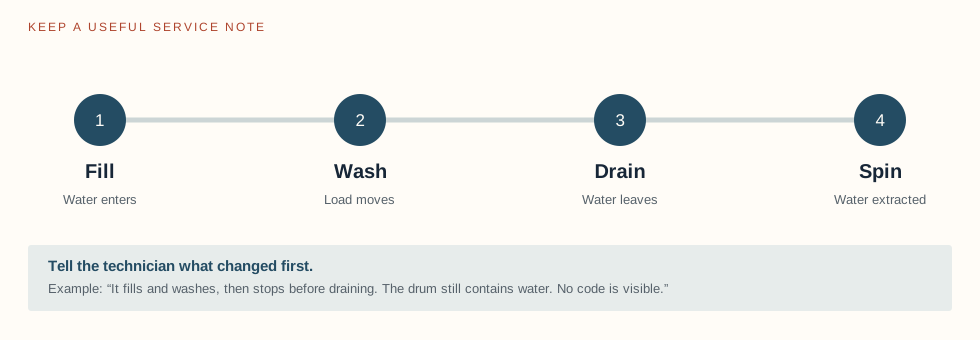
Keep the model, exact code, cycle stage, water location and previous attempts together. Create a copyable service brief before contacting the provider.
A common question
Does a balance code prove the suspension is broken?
No. Load distribution, installation and mechanical conditions can produce similar behavior. A persistent problem still needs model-specific assessment.
Related next steps
Sources & model scope
Content reviewed November 5, 2026. Match the exact model and US owner’s manual. These references support the explanation; they are not evidence of an inspection of your machine.