
Stop using a washer that is actively leaking. Keep clear of water near electrical equipment. If accessible safely, follow the manual for stopping the machine and shutting off its supply; do not reach through standing water to unplug it.
Four observations that change the next step
| What you observe | What it can mean | What to record |
|---|---|---|
| At a visible supply connection | Supply-side leak or connection issue | Record the location without tightening a live connection blindly. |
| At the front door or dispenser | Door area, detergent or overflow path | Note suds and the point in the cycle. |
| From the standpipe during draining | Home drain backup may be involved | Contact the appropriate plumbing or building-maintenance route. |
| Under the machine, source hidden | Several internal paths are possible | Describe timing and arrange appliance diagnosis. |
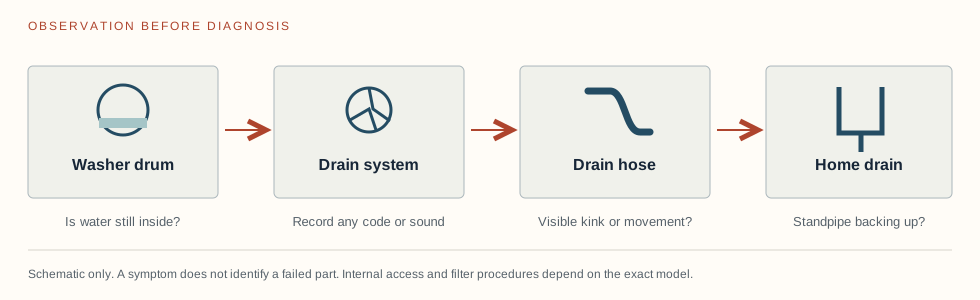
Owner checks: stay within the manual
- Note when the first water appeared: idle, fill, tumble, rinse or drain.
- From a dry safe position, look for the first wet connection or surrounding fixture. Water can travel along a cabinet or floor before it pools.
- Record detergent type and visible suds. Do not combine cleaners or add products in an attempt to cancel the foam.
- For a rental or shared laundry room, notify the responsible manager before arranging private work.
When to request service
Tell the repair provider whether the leak is active, the supply is isolated, the washer is upstairs and the machine is stacked. A damaged floor or building drain can need a separate professional.
What to avoid
Make the call easier
Keep the model, exact code, cycle stage, water location and previous attempts together. Create a copyable service brief before contacting the provider.
A common question
Is water underneath always a tub leak?
No. Supply, dispenser, door, drainage and household plumbing paths can produce a puddle under the cabinet. Timing and the first wet point help the professional narrow the inspection.
Related next steps
Sources & model scope
Content reviewed November 5, 2026. Match the exact model and US owner’s manual. These references support the explanation; they are not evidence of an inspection of your machine.