
A stopped cycle can relate to filling, draining, balance, a lock setting or another monitored condition. The moment it stops and the exact display are more useful than assuming a control board failed.
Four observations that change the next step
| What you observe | What it can mean | What to record |
|---|---|---|
| A brief pause, then it continues | May be normal model-specific sensing or balance behavior | Compare the behavior with the selected cycle in the manual. |
| Stops with water still inside | Drainage or another interruption may be involved | Record the code and water left in the drum. |
| Stops while filling or rinsing | Water supply or a monitored fill condition may be involved | Note household supply changes and the exact display. |
| Repeats at different stages | An intermittent condition needs a clear history | Log existing events and prior attempts without hazardous test cycles. |
Owner checks: stay within the manual
- Record the selected cycle and whether the pause eventually ends.
- Photograph the display before clearing a message. Distinguish a current alert from a stored diagnostic history.
- Note whether water remains, suds are visible or the machine tries to rebalance.
- Check the exact manual for normal sensing pauses, cycle options and displayed status messages.
When to request service
Request model-specific assessment when ordinary supported cycles repeatedly fail to finish, or a documented owner check does not resolve the detected condition. Use a warranty or landlord channel first if it applies.
What to avoid
Make the call easier
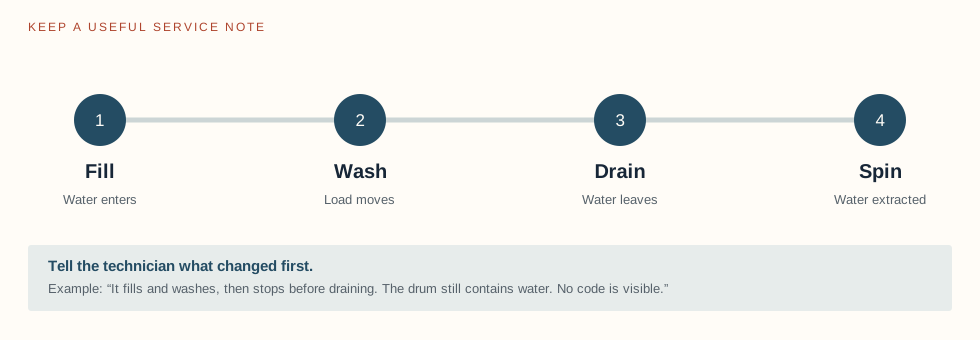
Keep the model, exact code, cycle stage, water location and previous attempts together. Create a copyable service brief before contacting the provider.
A common question
Is a long cycle always a repair fault?
No. Load sensing, water conditions and balance corrections can change a cycle. Persistent failure to finish or a repeat alert still warrants model-specific review.
Related next steps
Sources & model scope
Content reviewed November 5, 2026. Match the exact model and US owner’s manual. These references support the explanation; they are not evidence of an inspection of your machine.